A life of needles , numbers, and glucose meters.
What is the hardest thing you ever had to go through?
At age 18, I was diagnosed with type 1 Diabetes. The hardest thing l have ever faced. The highs and lows of Diabetes.
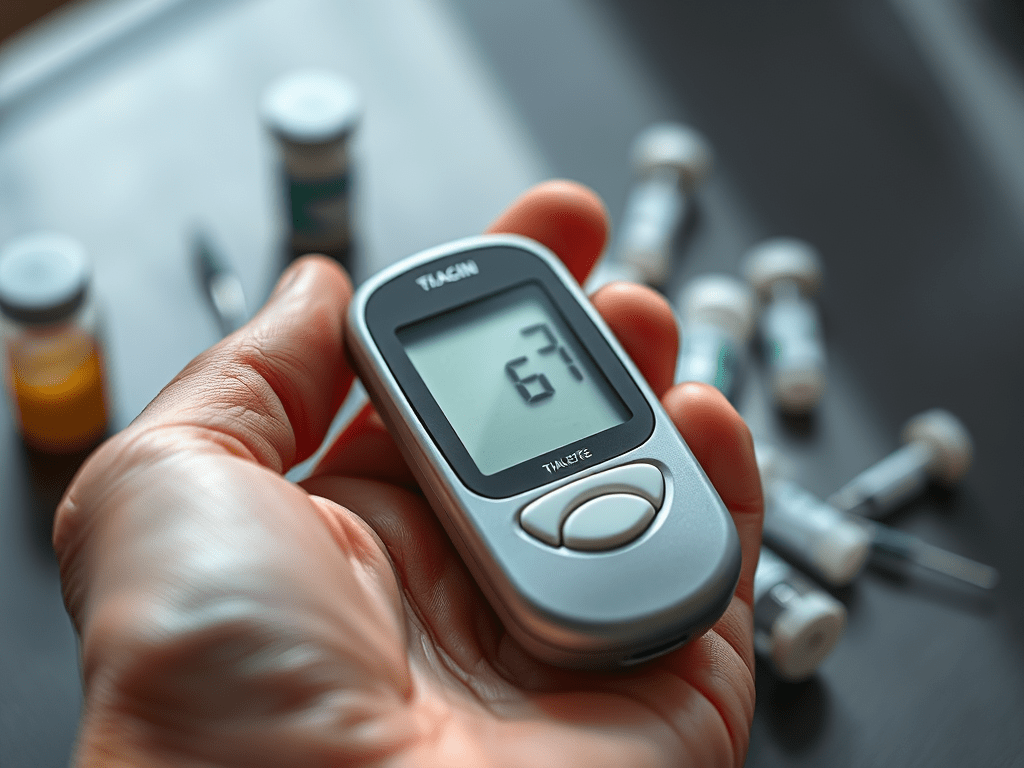
Diabetes, if you are unfamiliar with it, is a pure hell. You must regulate your blood glucose to prevent complications, coma, and even death from occurring on a daily basis. Checking your glucose with a monitor by “stabbing” your fingers 6–10x a day is considered best. Food can affect this condition. Exercise, even everyday exercise that we don’t think about, can affect your body. Stress and many other factors can (and usually do) cause changes as well. Understand what affects you and how it does. Learn to fix your non-normal glucose properly. See how your body reacts to everything, including food and insulin. Recognize the symptoms of high and low blood sugar. These symptoms are frightening, painful, and can cause many negative side effects. Injecting insulin with many needles is required. You must measure every single thing you eat and avoid heavy carbohydrates, fried foods, and sugar-filled food. It’s necessary to record all of this in a log or journal. Include exercise, glucose results, and any other factors. These are all parts of the daily routine of this disease and its management. This doesn’t even include expenses spent on needles, testing supplies, and medicine (if insurance doesn’t cover it). It’s a pure nightmare that diabetics have to deal with on a daily basis. Parents of children diagnosed with this disease perform the function of the pancreas. Their lives get turned upside down. Then there’s the common side effects that go hand in hand with the disease (due to a chemical imbalance caused by it)…
Next up is Depression and anxiety. When I turned 20, I was diagnosed with Major Chronic Depression, a common factor among diabetics. At first, I didn’t know what was happening, except something was wrong. I felt empty and had no joy inside. I lost all interest in anything I had previously enjoyed. I felt constantly sad and couldn’t stop crying. Eventually, I had to see my doctor. My doctor prescribed medicine (pills (Zoloft)). Despite taking it, I still had symptoms. I was in a constant state of sadness and pain caused by my mind. I had basically lost interest in life and living. This obviously interrupted my day-to-day life and attendance at Compass.
Another aspect of my mental illness became evident at that time. It went hand-in-hand with my depression. Looking back, I realize I didn’t know what it was until now. OCD. Specifically, Pure-O OCD. Most people think of repetitive hand washing as being OCD. They also associate being super, super organized with OCD. While this is somewhat true, it’s only a part of the disorder. The process starts in the brain, in thought. This is the obsession part, the O in the term OCD, and usually is not the fault of the person. When one particular thought occupies your mind almost constantly, you have an obsession. It could be something like the loss of a loved one. It overwhelms you to the point that you can not function normally as most people do. Imagine a thought, one that bothers you, repeating over and over again in your mind, and you can not stop it. This often leads to the compulsion, the C in the acronym of OCD. A person constantly worries about germs. They obsess over their existence and the fact that germs can enter the body and make them sick. This causes the person to take action to stop it, which is the compulsion. They wash their hands repeatedly, just as the thoughts occur repeatedly. I suffered from Pure-O OCD. I was not acting compulsively. All I could think about was the sad, sad thought of my mother dying. I worried and cried about it. This began my life-long battle with OCD.
Later, after a few years went by, despite temporary improvement in my symptoms for a time, the worst of the worst hit me. A disturbing thought entered my head and stayed there (for a long, long time until I received treatment). It caused me to hate myself and torture myself to the point that I couldn’t feel anything but pure agony and pain in my body. The terrible thought of a child being molested by anyone pervaded my mind on a constant basis. Worse yet still, I lived in fear and dread of performing this awful act, usually involving my loved ones. Please note I never acted on these thoughts. Please do not judge me. This wasn’t my fault (part of the disease). To this day I detest that this happened to me and have to fight the guilt and keep fighting to have the desire to go on. They disgusted me to the point I wanted to end my life due to the hatred of myself, writhing in agony and losing touch with any feeling except sheer disgust and hatred for myself. I wanted to die but was afraid to do so. I thought, at that time, this was it. Despite all my powerful hopes and dreams for my life, (like getting graduated with my friends l met at University, someday getting married and having children of my own, owning my own super awesome house and car, camping, fishing, hunting and doing outdoor stuff, raising a peregrine falcon, etc.) nothing mattered anymore. I reasoned that I was going to die then and there, and if I didn’t my life was over anyhow. I suffered from such sheer sadness, pain (caused by hatred for myself), and fear that anxiety became it’s worst and panic attacks began to occur in enormous strength. I frequently contemplated suicide and wanted death to come. I confessed such to the doctors and was eventually admitted to the pavilion, a section of the hospital, separated from the main facilities, for mental illness patients. I spent 2 months in the controlled environment, receiving treatment and taking steps to get better, despite believing I would die there and if I didn’t, it wouldn’t matter, as I was now scum of the earth and couldn’t go on knowing what had pervaded my mind. Thankfully, I met many similar individuals who had similar problems and were kind to me. In time, with treatment (therapy) and medicine, however, the thoughts subsided, and eventually I was able to cope and finally return home to my family, who I had come to miss very much. I wish I could say that from there I turned my life around and lived happily ever after, and although despite trying to move on and do so, sadly that’s not what happened.
Many years went by living a much better (improved) life than before, but it didn’t last. Eventually, the depression, anxiety, and OCD returned in a new way. This time, a different type of horrible thought repeated over and over again in my mind.
I know, I know. It’s beyond horrible. It’s still not my fault, though. This is all the result of the disease of Pure-O OCD. My mind once again turned to obsessing over the horrible thought of this occurring. Again, I felt as before. What kind of person must I be if this is what goes on in my mind, right. Once again, my body was in sheer agony. I hated myself intensely. My thoughts repeated over and over again. I lost all feeling of warmth and could not control the pain my body felt. I again wanted to die, despite deep down I had no reason for wanting to do this. I became fearful of something bad happening and went to extreme lengths to avoid it. Again, I was admitted to the hospital after speaking to my doctors and received treatment. Again, 2–3 months went by, therapy was administered, my medications were adjusted, and new ones were added. Eventually, my body’s chemical balance was greatly restored. I was able to cope and move on. I was discharged and sent home. Life returned to being more normal. Again, sadly, this isn’t the end of my story.
Later on, I discovered something concerning. My psychiatrist had put me on a very powerful and addictive medicine. It was meant to combat these problems caused by the diseases. Benzodiazepines, or benzos for short (Lorazepam). I eventually decided I wanted off of them. I made this decision after learning what they were and how they affected people. I also learned how addictive they could become and all the side effects. I eventually formulated a plan to wean myself off them and get free. Little did I know how exactly this would affect me. My massive panic attacks came back. My heart raced with uncontrolled, massive spikes of adrenaline. My breathing felt like it was going to stop. I felt detached from reality. I worried I was going to become a vegetable. I feared I was forgetting who I am, an effect in psychology called depersonalization. I couldn’t feel any warm feelings or emotions in my body. I had come this far, overcome my fears and problems only to die or become a vegetable, I felt. I often spaced out so bad. It felt like I detached from my body. I was floating through space as a lifeless, formless, amorphous being. It is the freakiest feeling I have ever felt. I dread the thought of it ever occurring again. I also dread any horrible intrusive thoughts. This brings me to where I am today.
“How am I alive? How do I live with the guilt of having had such intrusive thoughts? Pain, fear, and freakiness beyond imagination happened to me.” You may ask.
The answer is this:
1. I discovered what anchors me to this life. It is the love for my mom and family. I know they would feel sadness in my absence. They love me dearly despite what has happened to me. They have sacrificed much for me to be here. Also, I realized, even in my deepest, darkest moments, that life can get better. It has. I would miss all of the good things yet to come if I ‘opted out.’
2. I keep hope alive. I hold on to my dreams. I hope to do all the things I used to dream of as a young lady someday.
3. I know right from wrong. I have a strong moral compass. I know I hate these horrible thoughts that went through my head. I refuse to act on them in any way, shape, or form. In this regard, I know I am strong. I have never acted on them, and I never will.
4. I know who I am and what I want, which is nothing anywhere along the lines of that darkness.
5. Knowledge is power. Understanding that what has happened to me isn’t my fault is crucial. It’s all in the diseases that cause my unstable body chemistry and thus the symptoms I suffered.
6. Even during my darkest hours, there were brief moments of light. These moments pierced the darkness. They made me realize the value of life and all it has to offer. Despite all the bad, I wouldn’t want to miss all the good. I’m here to stay.
7. There is a possibility that someday my body will be cured. I hope I can live a normal, happy life. If not in this life, then in the life after this one. Like everyone else, this is a dream I cherish regularly.
8. I know my own mental strength. Going through that and resisting fully demonstrates my incredible strength in mind and spirit. I know that whatever comes my way in the future, I can overcome it if I put my mind to it. I can overcome any challenge. (This is called resilience). I am powerful. I am strong.
Why do I share this?
I know some of you will likely judge me. Some might even tell me I should kill myself. Believe me, I understand how you feel. I live with the guilt of such things almost every day. I know it isn’t my fault and was out of my control. I felt the same in the past. I wish I could go back and undue what has occurred. It is my hope, however, this story and knowledge can be shared. I want it to be known that despite facing such unbelievable and unspeakable nightmares, hope is always there. It can be survived and overcome. I hope this helps someone who also suffers from similar problems.